October 01, 2026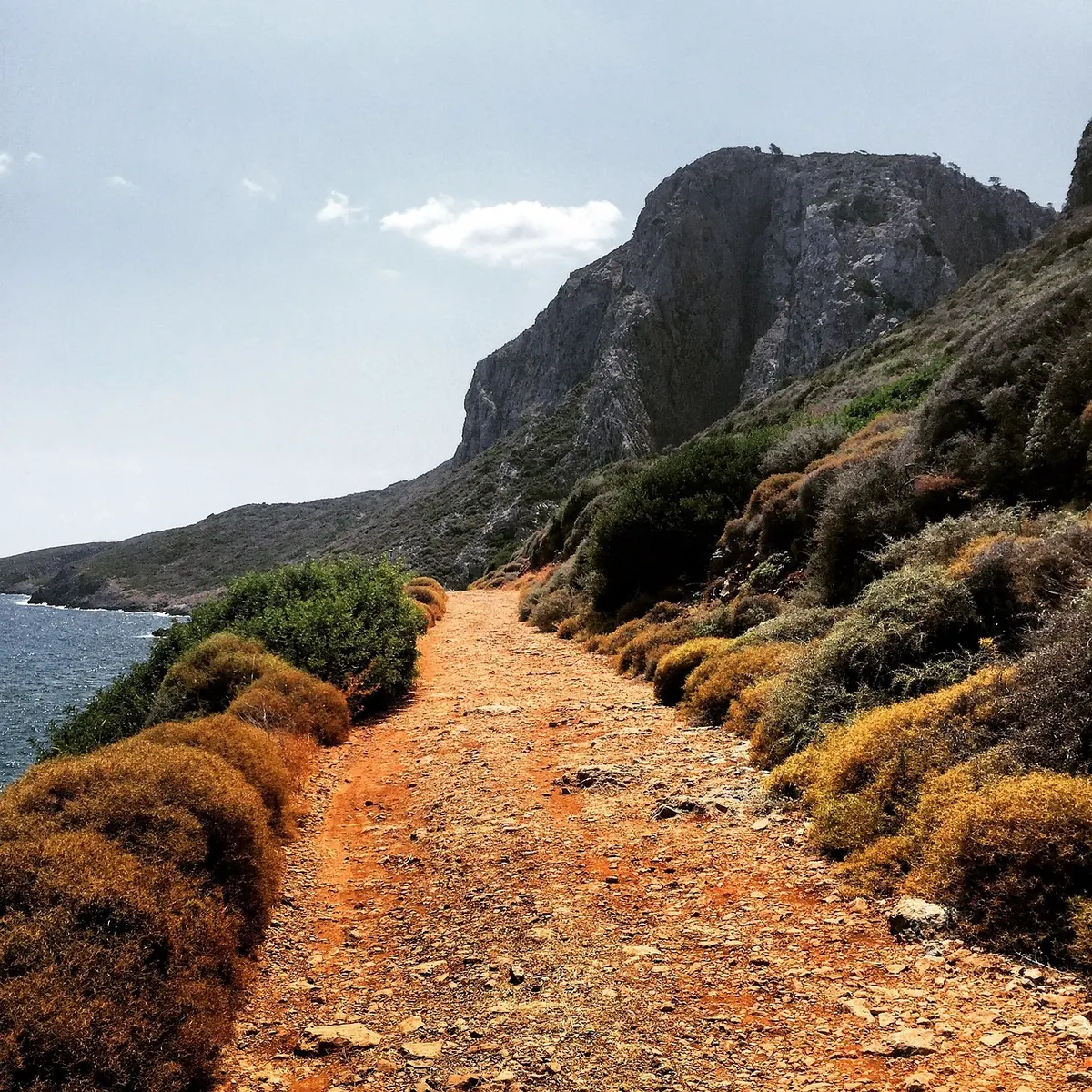
Two days out, same island, entirely different walks. One follows a cliff edge above a Pembrokeshire bay, dropping into a cove, climbing back out, with a pub at the end and salt drying on your jacket. The other climbs a Snowdonia ridge for two hours, reaches a summit in cloud, and asks you to navigate down on tired legs. Both are excellent. They also ask very different things of you, and choosing the wrong one for your fitness or the forecast is the quickest way to a miserable day.
Here is how the two compare, and how to work out which belongs in your diary next.
Terrain: what your boots actually meet
Coastal walking is rarely flat for long. Cliff paths rise and fall with every headland, and many are stepped — dozens, sometimes hundreds of steps in a single section. Surfaces change constantly: rock, grass, mud, sand, shingle, boardwalk, then a stretch of tarmac through a village. The South West Coast Path and the Pembrokeshire Coast Path are the obvious examples, but the Norfolk Coast Path and Fife Coastal Path follow the same pattern. Gentle in places. Quietly exhausting in others.
Mountain routes are usually simpler underfoot but more relentless in gradient. A Lakeland fell or a Scottish Munro gives you one long, sustained climb, often on grass, rock or loose scree, then a descent that punishes tired quads. Higher ground brings bog, boulder fields and, in winter, snow and ice that demand an axe, crampons and the skills to use them — kit that coastal walking never asks for.
Cumulative ascent beats distance
A twelve-mile coastal day can carry more climbing than a seven-mile mountain day. Before you commit, look at the route on a map or an elevation profile and check:
- Total ascent. Add up the climbing, not just the miles.
- Gradient. Repeated short pulls suit different legs to one long climb.
- Surface. Sand and shingle slow you down; wet rock demands care.
- Escape routes. How many points let you cut the day short?
Views, and what keeps you moving
On the coast, the views come cheaply and often. Sea, light, seabirds, harbours, a horizon that shifts all day. The reward is not reserved for a summit, which matters when cloud is sitting low. You will also meet more people, pass more cafés, and have more chances to stop.
Mountain views are earned, and often withheld. You might spend three hours in mist for ten minutes of clarity from the top. When it arrives, the scale is different — ridges, corries, whole valleys falling away. Popular routes are busy; walk an hour beyond the honeypot and you may see nobody at all.
Weather exposure: where the two really diverge
Wind defines coastal walking. Headlands funnel it, cliffs deflect it, and shelter can be absent for miles. Spray and salt soak through jackets that cope perfectly well with rain inland, and sea fret can drop visibility to a hundred metres on a day the forecast called clear. Add tide times and the odd wave-washed causeway, and you have hazards that have nothing to do with altitude.
On mountains, temperature falls as you climb, cloud often sits on the tops, and rain arrives sideways. Snow can linger on north-facing slopes well into spring. Mist removes landmarks, so a map, compass and the ability to use them are essential rather than optional. Wind chill on a wet ridge is a genuine hypothermia risk, even in summer.
Check a mountain-specific forecast for the tops and a coastal or inshore forecast for the shore. If the day looks marginal, favour the lower option — but remember that an exposed headland in strong wind can be harder work than a sheltered valley path.
Fitness and daily demands
Coastal routes are routinely underestimated. People plan fifteen miles on the assumption that "it's only the coast", then find the constant up-and-down plus all-day wind tougher than a mountain day of half the distance. Knees and ankles take the steps badly, and hips take the sand.
Mountain days tend to be shorter in distance but heavier in effort: more climbing, slower ground, and rocky descents that demand concentration. Altitude is rarely an issue at UK heights, but sustained ascent is.
Ask yourself honestly:
- Can you climb 500 metres of ascent and still enjoy the walk back?
- Are your knees happy with a thousand downhill steps?
- Can you read a map in poor visibility, or would you rather follow waymarks?
- Do you mind carrying a full day's food and water, or would you prefer to refill in a village?
- How far from help do you want to be?
Kit and logistics
On the coast, water is the main practical problem. Streams are scarce and often not safe to drink, so plan around village taps and shops. Buses and car parks make linear walks easier, though some stretches have no exit at all. Lighter boots are fine, and poles earn their place on stepped descents. Tide times belong in your planning, not your pocket.
For the mountains, carry layers, a spare insulating layer, a proper waterproof shell, map and compass, headtorch, food and an emergency shelter. Phone signal is patchy at best. Start early, park sensibly, and leave your route with someone at home.
So which should you pick?
- New to long walks: coastal, low-level, with villages along the way.
- Wanting solitude and summits: mountain routes, away from the busiest paths.
- Training for a long-distance trail: the coast for back-to-back days, the hills for climbing strength.
- Mixed group or uncertain fitness: coast path, with a short-day option built in.
- Grim forecast: choose the lower, sheltered route — and check the wind, not only the rain.
A practical way to choose
Work through this before you leave the house:
- Check both forecasts: mountain for high ground, coastal for the shore.
- Count the ascent, not the miles.
- Pick the surface your legs handle best.
- Choose a route with at least one escape option.
- Tell someone your route and your expected finish time.
The best trail is not the hardest one. It is the one you finish still enjoying, with something left in your legs for the walk back to the car. If you have a heart, lung or joint condition, or you are stepping up from day walks to multi-day routes, it is worth a word with your GP or a qualified walking leader first. Then choose your coast or your mountain, and go.
Photo: StockSnap / Pixabay